
Figma's Product Strategy - Explained!


In this article, we will discuss —
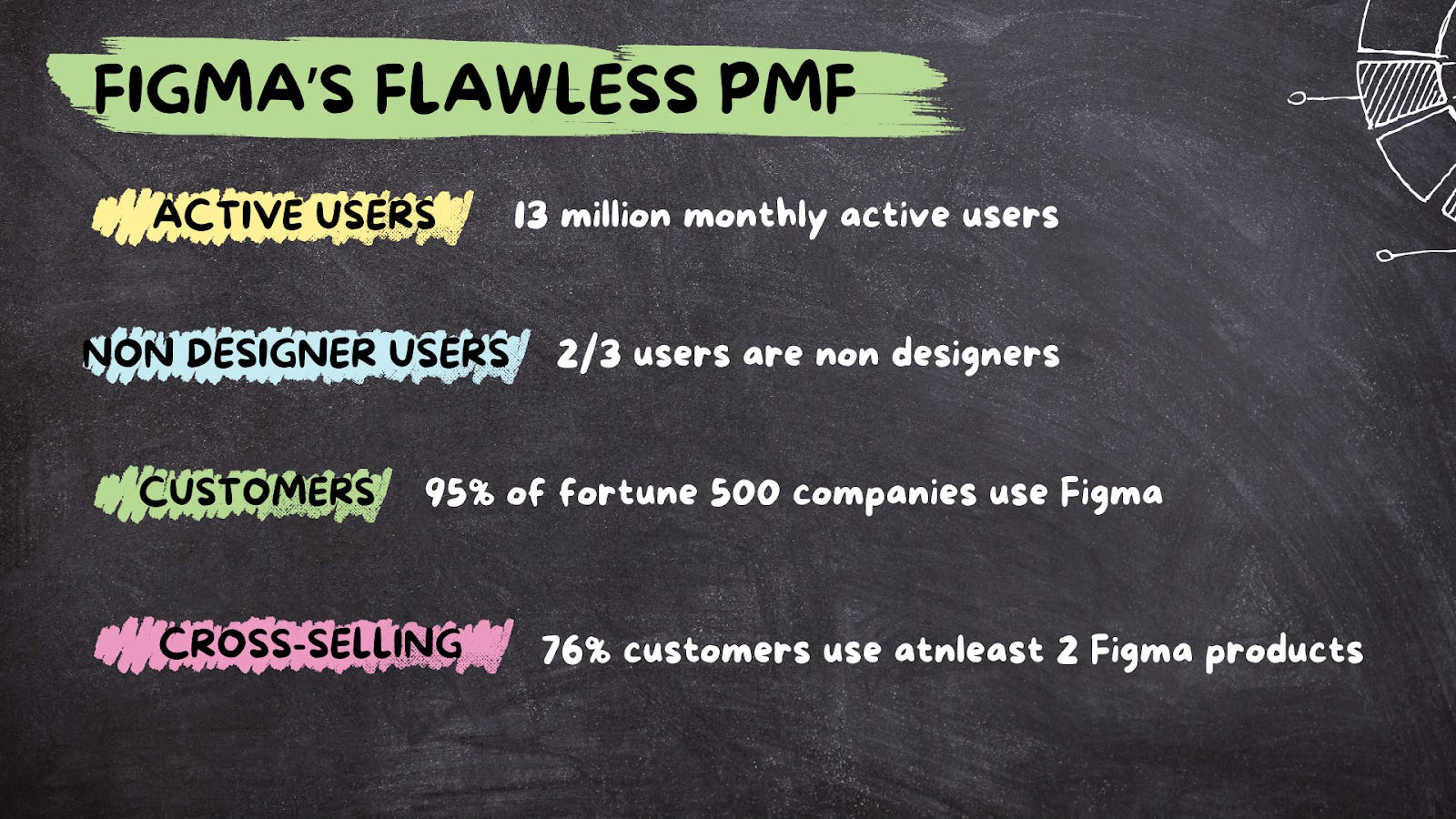
How Figma achieved product-market fit
Evolution of Figma as a product over the years
Future Product Roadmap of Figma ( Possible )
For More Such Detailed Case Studies

The Problem: Disconnected Design in a Digital World
When Figma was launched in 2012, it was not the first design software. There were multiple design solutions which were already present, but all of them lacked one core capability “collaboration”.
All of the existing tools, such as Sketch, Adobe XD were allowing users to create a digital version of the designs but lack of collaboration tools caused following problems:
1:1 Designer - Product Work setting: The design work used to happen in siloes where a designer is working on a project on her / his device. This work setting discouraged multiple designers to work on a single complex design problem and this inefficiency led to long deadlines for completion
Fragmented Feedback Loops: Once the first version of a design is completed, a user needs to share the design with “n” of her / his stakeholders for getting feedback. This exercise will likely result into “m” different feedbacks, all scattered across emails, chats with no single source of visibility
Versioning Conflicts: While working through different iterations of the design based on the feedback received, a designer might create multiple versions of a project. The really difficult question for him to answer becomes - Which version is the latest, more importantly does it contain all of the changes needed?
Figma's Foundational Solution: Browser-Based Collaboration
Figma was envisioned as a browser-based, collaborative design tool to address inefficiencies in the design process. The first MVP of Figma was launched in 2015 and since then there has been no looking back.
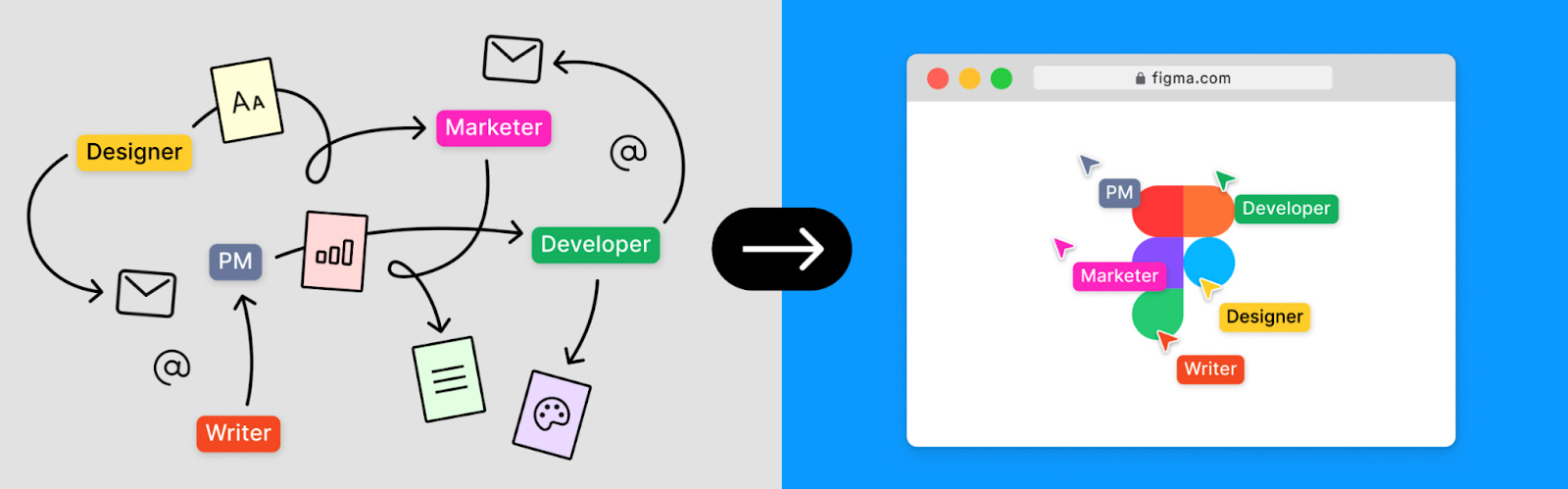
The user problems identified were relevant and were only going to become more prominent as the amount of digital software created increased. Figma was the product needed to address these problems and a great product market fit helped achieve Figma a scale, which no other design software could achieve in a very short span of time.
The “Figmafication” of the Product Workflow
While Figma’s journey has been very bold, their future plans are even more ambitious. They are planning to have control over the entire product development lifecycle (PDLC). In order to understand their future roadmap, it is very important to understand the digital product lifecycle. Let’s try to understand it with an example -
Imagine that you are a product manager working on ways to curb the churn on the platform. While deciding what products you can build, you are likely to follow the process below:
Ideate: A stage, where you are trying to gather different ideas to help in solving the problem. Once gathered, you are also trying to get feedback from your stakeholders to define the pros and cons for each and every idea.
Visualize: Once you have shortlisted an idea to go ahead, the next step is to visualize it in the form of a digital product. In the process, you are trying to create wireframes/prototypes and hand it over to your design team for pixel perfection.
Build: Once the design for your product is finalized, the onus comes on building a working product out of it, which can be used by users.
Ship & GTM: Once the final product is built, it needs to be marketed and shipped to the audience to increase adoption. In order to do the same, one needs to create the marketing content or promote the products by either creating new or updating existing websites.
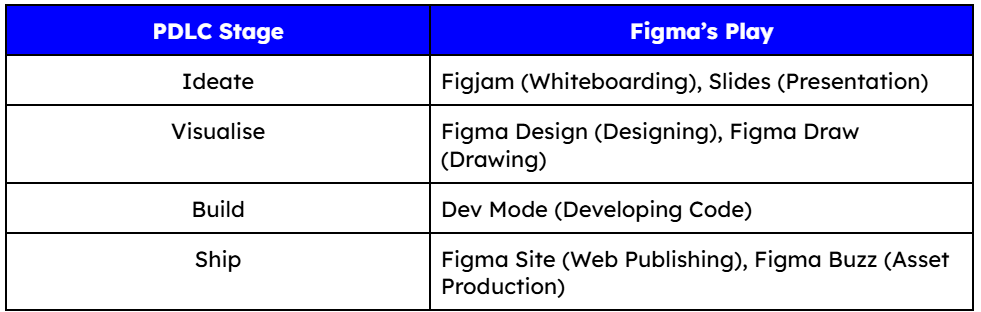
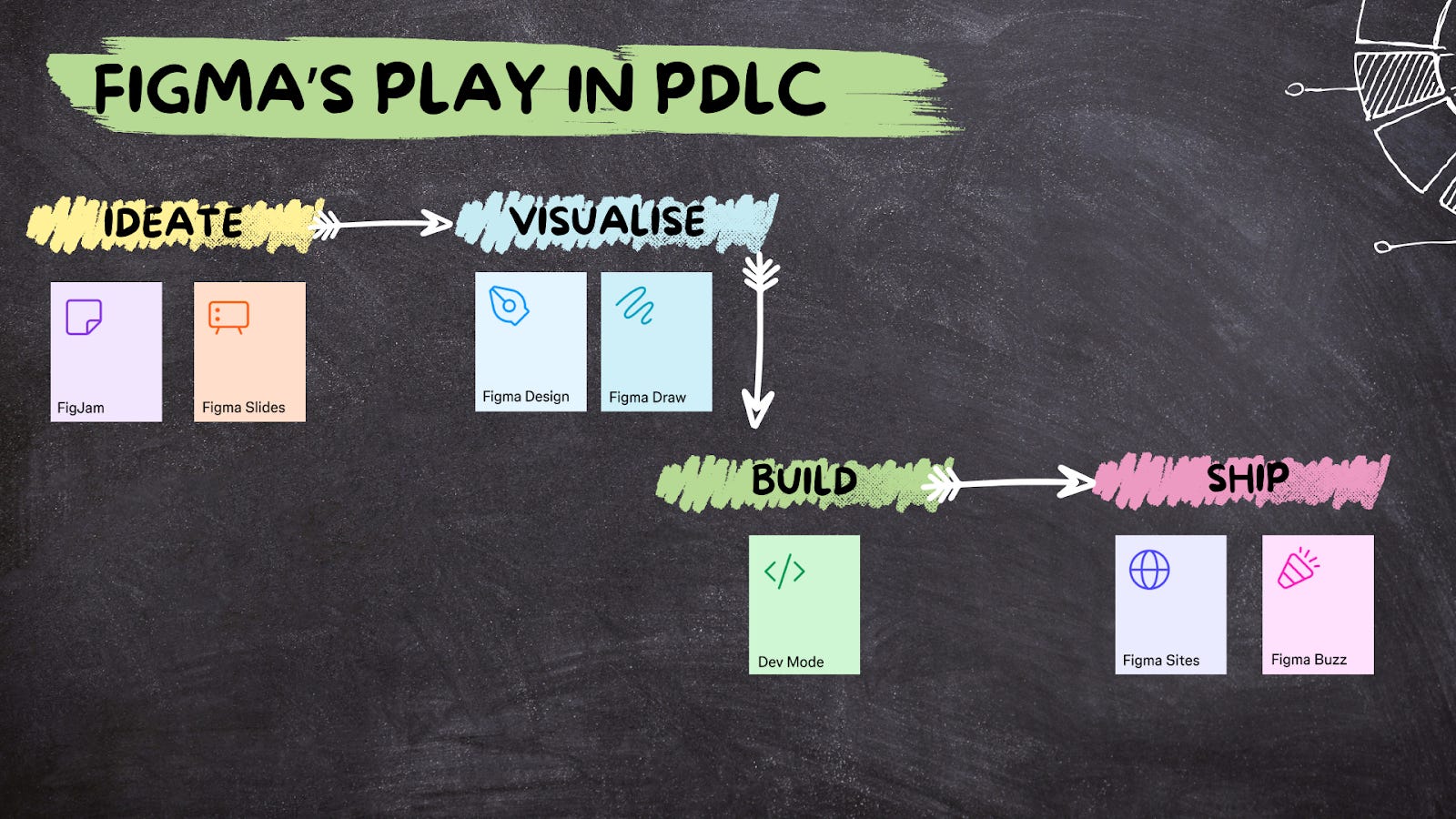
Across every lifecycle, Figma is now trying to play a role. In the first 5-7 years, Figma has maintained a disproportionate focus on the visualisation part of the product lifecycle. Since the switching costs of changing a design software is very high, after achieving the pole position in the market, one can expect Figma to put less focus on the visualisation part but more on other parts of the product development lifecycle.
The AI Revolution and Figma's Enduring Moat: Craft
As advancements in the field of AI occur, all stages of the product development lifecycle will likely converge into a single-step process. With a single input prompt, a user’s idea can turn out into a working prototype/product.
Be the Top 1% PM | YouTube | PM Cohort & Resources | Crack PM Interview | AI/Tech for Everyone
About Author
Shailesh Sharma! I help PMs and business leaders excel in Product, Strategy, and AI using First Principles Thinking. For more, check out my Live cohort course, PM Interview Mastery Course, Cracking Strategy, and other Resources
 | A guest post by
|